
Dorchester County Criminal Court Cases
The Dorchester County Court of General Sessions is the criminal division of Circuit Court. It handles felony prosecutions and other higher criminal matters. The Clerk of Court keeps those Dorchester County criminal court files at the county courthouse, 5200 East Jim Bilton Boulevard in St. George. Circuit Court is on the second floor. The clerk's public hours are 8:30 a.m. to 5:00 p.m. on weekdays, except holidays. Call the main clerk at 843-563-0160 or the Criminal Clerk directly at 843-563-0231.
Magistrate courts and municipal courts have limited summary jurisdiction. They handle matters that do not belong on the same General Sessions docket. That split is vital in Dorchester County because a city citation may remain with a municipal court, while a felony charge moves into General Sessions. The court that created the record remains its custodian. The clerk can provide plain or certified copies, older material that is not online, and help identifying the precise docket entry. A certified copy is the clerk's authenticated record and is the better choice when formal proof of an outcome is needed.
Dorchester Criminal Courts Compared
A search can fail when the reader starts in the wrong court. Dorchester County General Sessions covers felony-level prosecution. Magistrate courts handle summary criminal jurisdiction set by state law. Municipal courts handle city offenses and state charges within their limited authority. Summerville, Ridgeville, and Harleyville municipal records participate in the statewide Public Index as of December 1, 2025, but each participating court still has its own court agency in the system.
The Summerville Municipal Court source shows how a city court fits into South Carolina's judicial structure.
That municipal layer should be searched apart from the Dorchester County General Sessions file when the case began as a city-level charge.
| Court level | Typical record | Best starting point |
|---|---|---|
| General Sessions | Felony and higher criminal case file | Dorchester Trial Court Public Index, then Criminal Clerk |
| Magistrate court | County summary criminal matter | Public Index court agency or the assigned summary court |
| Municipal court | City citation or summary city case | Participating municipal index or city court |
Searching Dorchester County Case Records
The South Carolina Judicial Branch Case Records Search is the safest entry point. Choose Dorchester County to open the Dorchester Trial Court Public Index. Search by party name when the case number is unknown. Use the case route when a number is available. A Dorchester General Sessions number often follows the form YYYY-GS-18-NNNNN. The year marks the filing year, GS denotes General Sessions, and 18 is the county code. Search results are informational, not certified.
- Open the Judicial Branch search and select Dorchester County.
- Choose Party Search for a name or Case Search for a known number.
- Narrow the results by court agency, case type, status, or filing dates.
- Open the case number and read the charge, event, hearing, and disposition lines together.
- Call or visit the Criminal Clerk for older files, missing entries, or a certified disposition.
The index needs cookies and JavaScript. Pop-up exceptions may also be required. The Judicial Branch publishes Public Index search help for the system. If a result will not open, check those browser settings before assuming the Dorchester County criminal court case is absent.
| Field label | Type | Required | Use |
|---|---|---|---|
| Search type | Tabs | One route | Case Search or Party Search |
| Case Number | Text | No | Use the full South Carolina case format when known |
| Court Agency | Dropdown | No | Select the Dorchester court that created the file |
| Case Type / Sub Type | Dropdown | No | Narrow criminal categories by agency |
| Case Status | Dropdown | No | Limit results to system status |
| Filed From / To | Date | No | Narrow a filing period |
| Last / First / Middle Name | Text | Party route | Begin with surname and add names to refine |
| Party Type / Soundex | Control | No | Filter roles or account for spelling variants where shown |
Dorchester Public Index Limits
The online index is broad, but it is not the whole Dorchester County court file. Older or unscanned material may require the St. George counter. Public document availability varies by case. Sealed items, confidential records, and protected identifiers do not appear. Since January 1, 2026, home addresses are no longer displayed in Public Index cases. That change protects address data without erasing the public docket itself.
A missing result has several possible causes. The name may be spelled another way. The matter may sit with a municipal court, may be too new to appear, or may be sealed. A booking charge can also differ from the charge later filed by the solicitor. Use the event history and exact disposition rather than relying on a result-list label. For older files or a result that cannot be reconciled, call 843-563-0231 and provide the name, rough filing year, and any known case number.
Note: “Disposed” means the court entered an outcome; it does not by itself mean the defendant was convicted.
Inside a Dorchester County Case File
A Dorchester County criminal court file centers on the prosecution, not the jail intake. The header identifies the court agency, case number, type, filing date, status, and assigned judge. Party rows identify the defendant, the State, and attorneys when entered. Charge rows can show the offense text, code, count, and reported outcome. The docket is the dated list of filings and court events. It may include service, hearings, continuances, motions, plea, trial result, sentence, and post-judgment activity.
| Case Number & Court | Identifies the filing year, court division, county code, sequence, and court agency. |
|---|---|
| Parties | Lists the defendant, State, and attorneys where entered; public home addresses are suppressed. |
| Charging Record | Shows the filed offense description, statute or code, and count when reported. |
| Docket Entries | Records filings, service, motions, continuances, pleas, and later events by date. |
| Hearing / Roster | May show a date, time, court term, and event type. |
| Disposition & Sentence | States the reported outcome and court-ordered consequence when entered. |
| Documents & Financials | Availability varies; some summary-court assessments or documents may be visible. |
Read related fields as a set. A charge row without a final disposition is not proof of guilt. Likewise, a docket marked closed or disposed still needs its exact outcome line.
Dorchester Criminal Docket Terms
South Carolina docket terms are short, yet each carries a distinct meaning. The wording matters most when a Dorchester County case has ended. A dismissal ends a charge without conviction. An acquittal means not guilty. A nolle prosequi means the prosecutor ended the charge. An indictment is a grand jury charging document, while a true bill means the grand jury approved it. None of those terms should be reduced to the broad word “disposed.”
- Arraignment
- The court stage at which the defendant makes a formal plea.
- Disposition
- The precise outcome of a charge or case.
- Nolle prosequi
- The solicitor ends prosecution of the charge.
- Capias
- A court command directing that a person be taken into custody.
- Concurrent sentence
- Two or more terms run at the same time.
- Consecutive sentence
- One term begins after another term ends.
The court's outcome controls. If the public display is unclear, request the judgment or certified disposition from the Dorchester County Clerk of Court.
How a Criminal Case Moves
A Dorchester County prosecution may begin with an arrest or summons, followed by bond or an initial appearance. The solicitor then makes a charging decision. A General Sessions charge may proceed through indictment where required. Arraignment records the plea. Discovery and motions shape what happens before trial. The matter can end through a plea, trial, dismissal, acquittal, or nolle prosequi. A conviction may lead to sentencing, and later entries may record an appeal or other post-judgment work.
Case flow: Charges Filed › Arraignment › Pretrial › Plea or Trial › Disposition › Sentencing
The filing sequence can explain why an arrest line and a Dorchester County court charge do not match. The arresting agency records the initial allegation. The prosecutor defines the filed charge, and the court records its final result. For the police and booking side of that sequence, use the county arrest lookup.
Dorchester Sentences and Supervision
A sentence line can point beyond the clerk's file. The South Carolina Department of Corrections handles sentenced state-prison custody, while the South Carolina Department of Probation, Parole and Pardon Services tracks active community supervision. South Carolina's offense classification law supplies general felony and misdemeanor maximums, but the signed judgment controls the actual sentence. None of these sources changes the judgment kept by the Dorchester County court.
The official SCDPPPS offender search provides the state supervision layer.
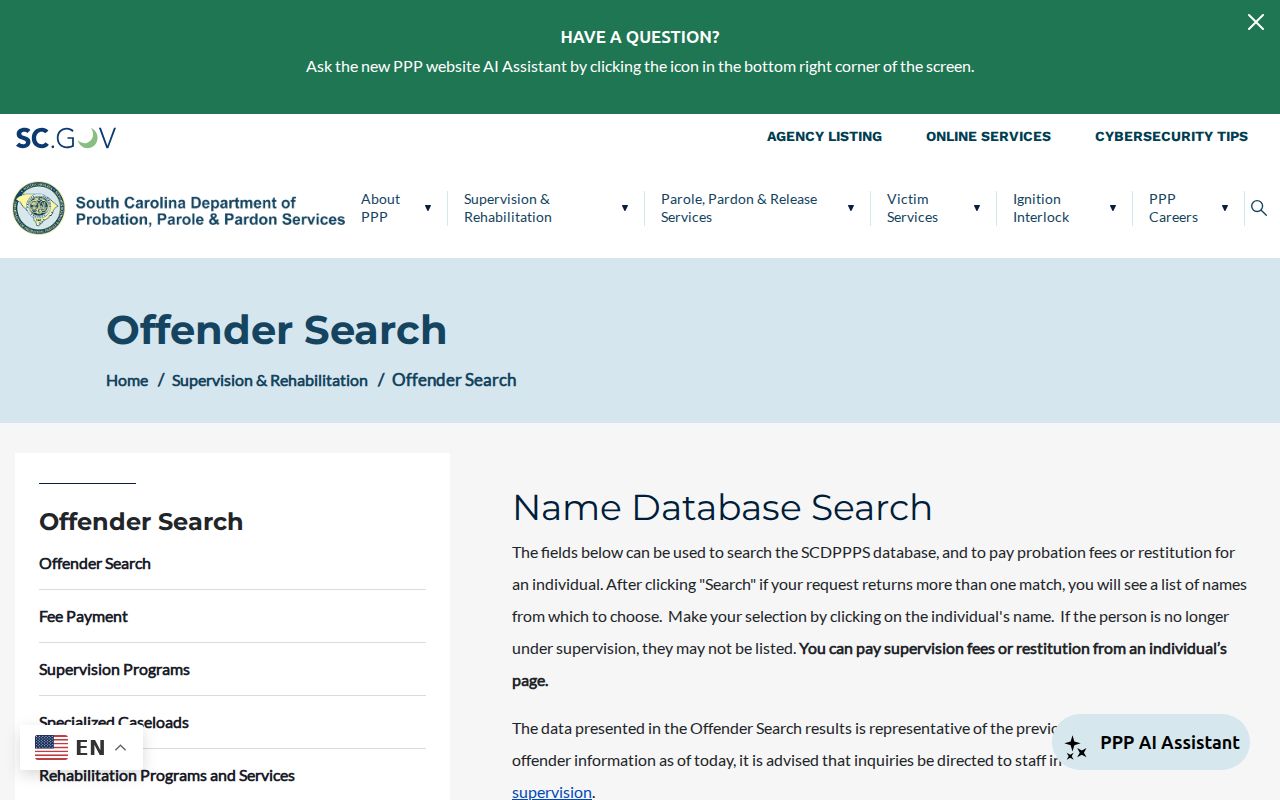
This state search should be checked against the Dorchester County disposition because prior-day data and limited public fields do not replace the signed court record.
Dorchester Federal Criminal Cases
Federal criminal cases do not appear in the South Carolina Public Index. Dorchester County lies in the Charleston Division of the U.S. District Court for the District of South Carolina. Federal dockets use PACER, which requires registration and generally charges under the federal per-page schedule. The state clerk cannot certify a federal case. The federal court counter or PACER supplies that separate record layer.
The official PACER gateway is the source for federal docket access.
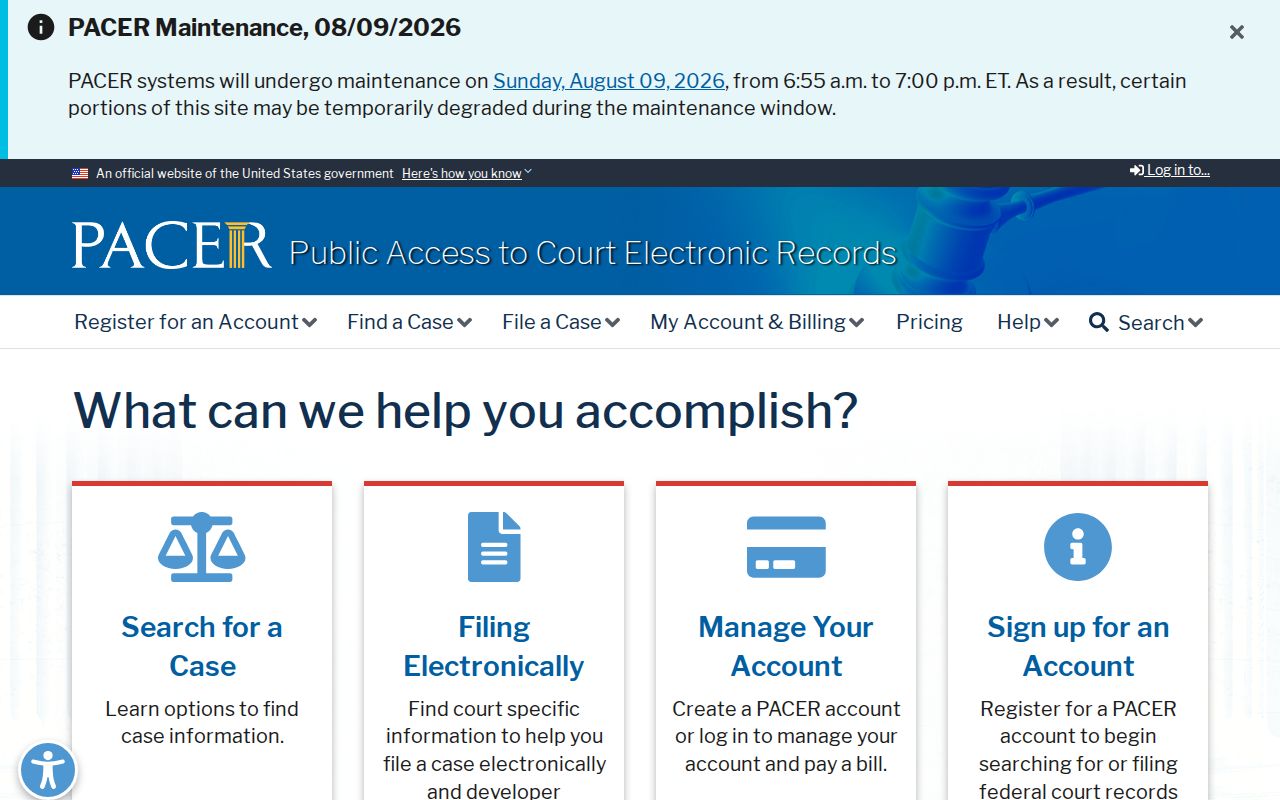
The PACER image marks a separate jurisdiction: a federal case search cannot be replaced by a Dorchester County Public Index query.
Case Record Access & Restrictions
The South Carolina Freedom of Information Act supports access to nonexempt public records, but court access also follows judicial privacy and filing rules. Juvenile matters, sealed cases, protected victim or minor data, Social Security numbers, financial-account data, and other confidential material may be absent or redacted. Appellate Court Rule 10 requires sensitive-data controls in filed material. Online access does not turn a restricted document into a public one.
Start with the Public Index. Then request the identifiable record from the clerk that holds it. The St. George Criminal Clerk is the source for General Sessions copies, certifications, and older Dorchester County criminal court files. State the case number and the exact item sought, such as the sentencing sheet or disposition. The First Circuit Public Defender county page concerns appointed counsel, not record copies. South Carolina's pretrial intervention provisions can affect a later record, but eligibility begins with the proper program or court, not an index assumption. If the index and clerk record differ, rely on the official clerk copy.